
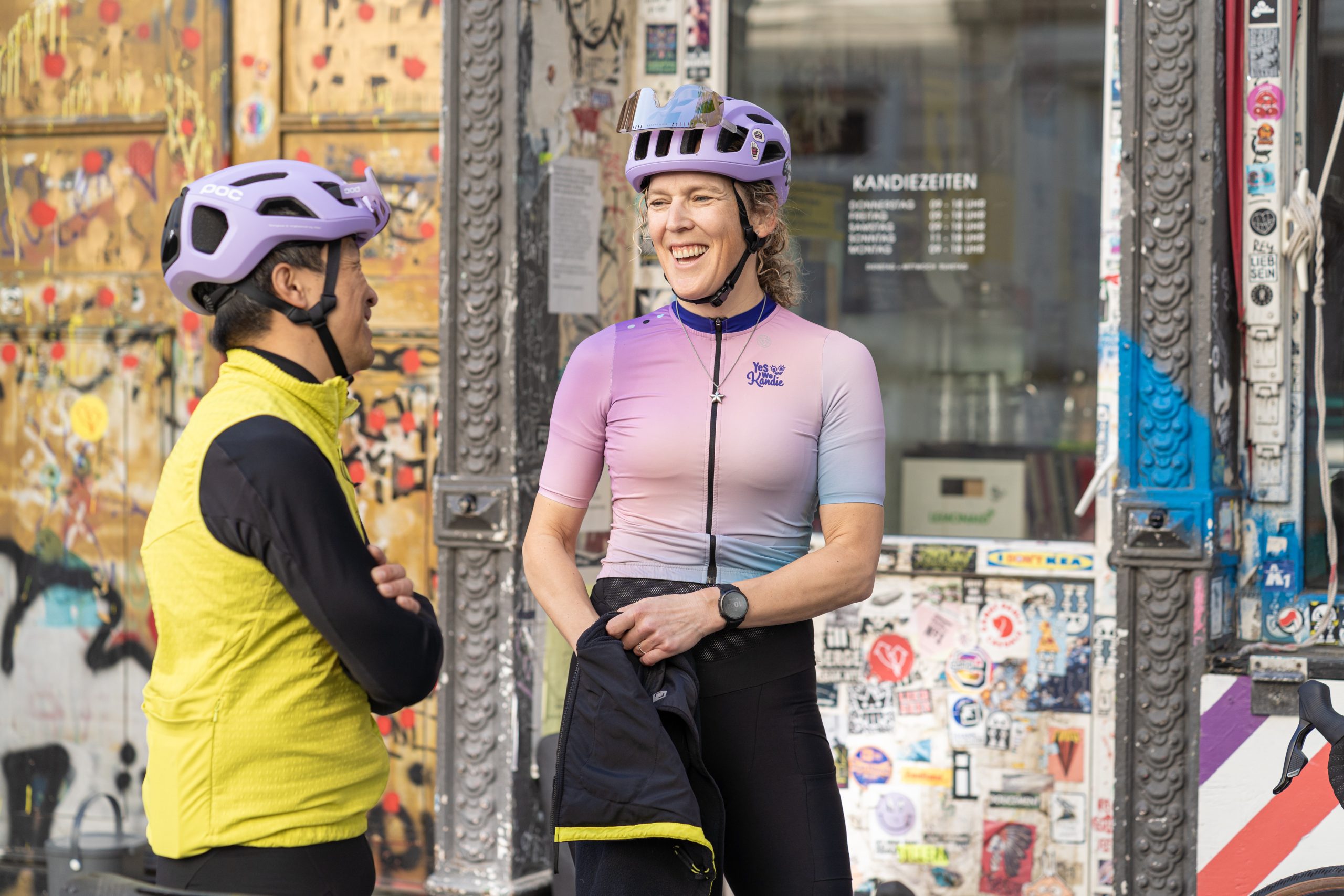
We ride together, but not everyone starts from the same place.
Recently, an interview with our own Kathi Sigmund, the taz article put something into words that many of us have long felt: cycling doesn’t just have a participation problem—it has a visibility problem. As Kathi explains, “there is a lack of visibility of women” in the sport, and that absence shapes who feels welcome to even begin.
We see this every time we ride.
Because the issue isn’t whether women or marginalized riders are capable. It’s whether they are seen, supported, and represented. Without role models, without spaces to connect, without stories that reflect diverse experiences, cycling remains narrower than it needs to be.
That’s where our rides begin.
At Kandie Gang, we’ve never understood cycling as just performance. It’s not about who is fastest or strongest. It’s about who gets to take up space—on the road, in conversation, and in the culture around it.
In the same interview, Kathi talks about something we hear again and again: when people ride together in intentional spaces, different conversations emerge—about bodies, health, aging, or simply how it feels to exist in a sport that hasn’t always made room for you.
That difference matters.
Because inclusion isn’t abstract. It shows up in the tone of a ride. In who feels comfortable speaking. In whether someone comes back next week.
We’ve built our community around that idea:
that cycling can—and should—be a place where FLINTA*, BIPOC, and all underrepresented riders are not just present, but central.
And yes, things are shifting. More women are riding. More communities are forming. But as the taz piece makes clear, numbers alone don’t change culture.
Visibility does. Representation does. Community does.
So we keep riding.
Not just to be part of cycling—but to reshape it.